
An Overview of Modern Skin Cancer Treatment Options
From topical therapy to Mohs surgery and immunotherapy, a clear overview of how dermatologists treat skin cancer today.
Why Treatment Options Vary So Widely
Skin cancer treatment is not one-size-fits-all. The right approach depends on the type of cancer, its location, its size, the patient's overall health, and whether the lesion is new or recurrent. Basal cell carcinoma, squamous cell carcinoma, and melanoma each behave differently and respond to different therapies. Within those categories, factors such as tumor depth, histologic aggressiveness, and patient immune status further refine the choice of treatment. Understanding the main categories of treatment helps you have a more informed conversation with your dermatologist about the plan that fits your situation.
Topical and Field Therapies
For very superficial skin cancers and precancerous lesions, topical therapies can be effective without surgery. Prescription creams such as 5-fluorouracil and imiquimod trigger an inflammatory response that destroys abnormal cells over several weeks. Photodynamic therapy combines a topical photosensitizing agent with light exposure to treat widespread actinic keratoses and some superficial basal cell carcinomas. These options are best suited for lesions that are thin and located in areas where surgical excision would be difficult or cosmetically undesirable. They require patience and careful follow-up but can spare healthy tissue.
Surgical Excision and ED&C
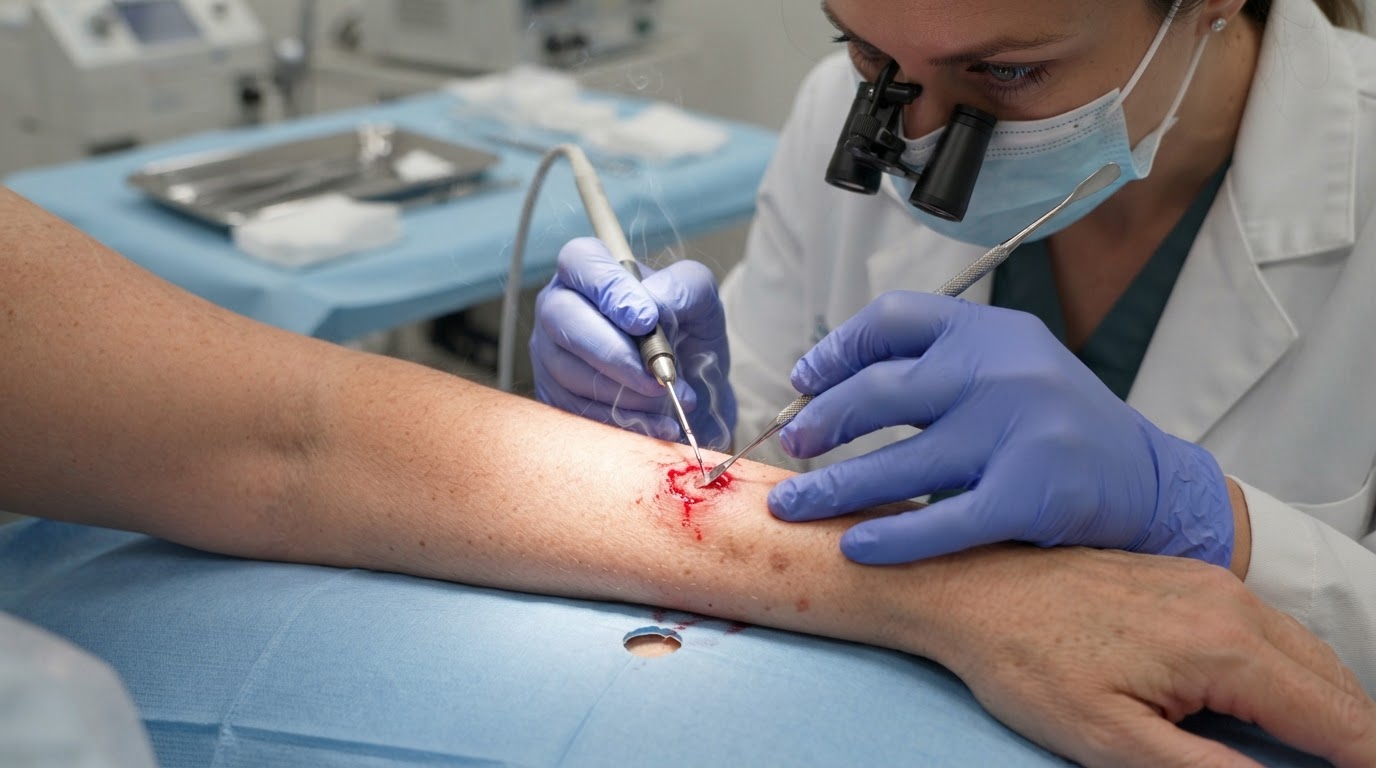
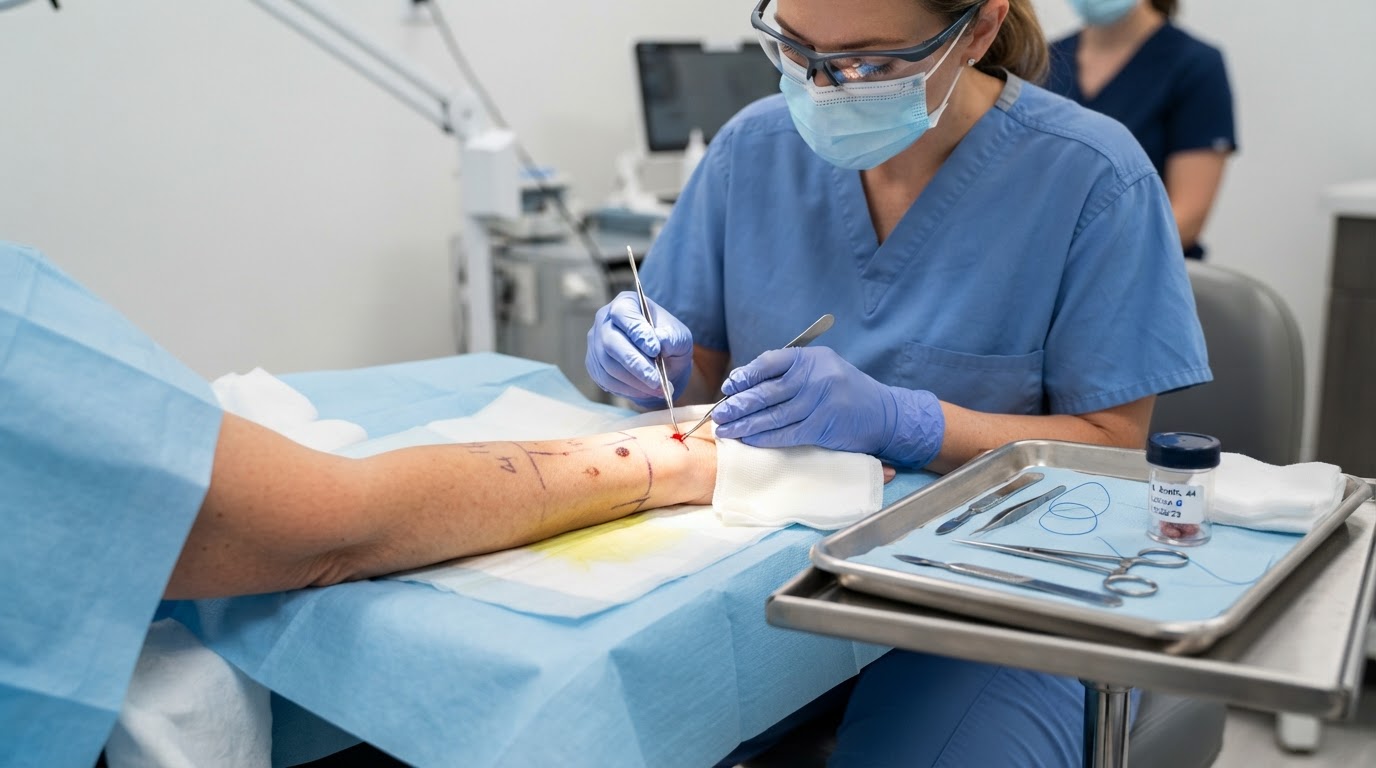
Surgical excision removes the cancer along with a margin of healthy skin and is the most common treatment for basal and squamous cell carcinoma on the trunk and limbs. The specimen is sent to a pathology lab to confirm that the margins are clear. Electrodessication and curettage, often called ED&C, is a quick scrape-and-burn technique suitable for small, superficial lesions in low-risk areas. Both procedures are performed in the office under local anesthetic and have high cure rates for appropriately selected lesions. The choice between them depends on tumor type, location, and the patient's healing preferences.
Mohs Micrographic Surgery
Mohs micrographic surgery is the gold standard for skin cancers on the face and other areas where tissue conservation is critical. The Mohs surgeon removes a thin layer of tissue, examines it under a microscope while the patient waits, and maps any remaining cancer to a precise location. This process repeats until the margins are clear, ensuring complete removal while sparing the maximum amount of healthy skin. Mohs offers the highest published cure rate for basal and squamous cell carcinoma, up to ninety-nine percent for new tumors, and is particularly valuable for recurrent or aggressive lesions.
Systemic and Radiation Therapies
For advanced melanoma or squamous cell carcinoma that has spread beyond the skin, systemic therapies have transformed outcomes. Checkpoint inhibitor immunotherapy such as pembrolizumab and nivolumab unleashes the immune system to attack melanoma cells and has dramatically improved long-term survival. Targeted therapies for melanomas with specific genetic mutations offer another option for advanced disease. Radiation therapy is used when surgery is not feasible, for elderly patients who cannot tolerate an operation, or as an adjunct after excision of aggressive tumors. Your dermatologist will coordinate with medical and radiation oncologists when these therapies are part of your plan, ensuring comprehensive, multidisciplinary care.
Choosing the Right Treatment for Your Situation
No single treatment is right for every skin cancer, and the best choice depends on a careful balance of factors that your dermatologist will weigh with you. The type of cancer is the first consideration: basal cell carcinoma, squamous cell carcinoma, and melanoma each respond to different therapies, and even within a single type, the histologic subtype can change the recommendation. Location matters as well, because lesions on the face, eyelids, nose, lips, ears, hands, and genitals require techniques that preserve function and appearance, often pointing toward Mohs surgery. The size and depth of the tumor influence whether a topical cream, a simple excision, or a more extensive procedure is appropriate. Your overall health plays a role too, since patients who cannot tolerate surgery due to age or medical condition may be better served by radiation or topical options. Finally, your personal preferences about scarring, recovery time, and the number of visits required deserve a place in the conversation. A dermatologist who explains these factors clearly and welcomes your questions will help you arrive at a treatment plan that is both medically sound and aligned with your priorities, which is the foundation of a good outcome and a smooth recovery.
This article is educational and is not a substitute for professional medical advice, diagnosis, or treatment. Always seek the guidance of a qualified dermatologist or other licensed health provider with questions about a medical condition.
Looking for a specialist in this area? Browse Basal & Squamous Cell Carcinoma Care