
A Patient's Guide to the Full-Body Skin Examination
Everything you need to know about a full-body skin examination, from what it detects to how often you should schedule one.
What a Full-Body Skin Examination Detects
A full-body skin examination is a comprehensive visual inspection of the entire skin surface performed by a dermatologist or trained clinician. Its primary purpose is to identify skin cancers, including melanoma, basal cell carcinoma, and squamous cell carcinoma, at the earliest possible stage when treatment is most effective. The examination also detects precancerous lesions such as actinic keratoses, which can be treated before they progress to squamous cell carcinoma. Beyond cancer, a full-body exam can reveal benign growths, infections, and inflammatory conditions that you may not have noticed, making it a valuable general skin health check.
Who Should Schedule One and How Often
Adults with fair skin, a history of intense sun exposure, numerous moles, a personal or family history of melanoma, or a weakened immune system should schedule a full-body skin examination annually or more frequently as recommended. Even adults without specific risk factors benefit from a baseline examination in their twenties or thirties, which creates a reference for future comparison. Patients who have had a skin cancer diagnosed previously typically require surveillance every three to six months for several years after treatment. Your dermatologist will tailor the recommended interval to your individual risk profile.
How the Examination Is Performed
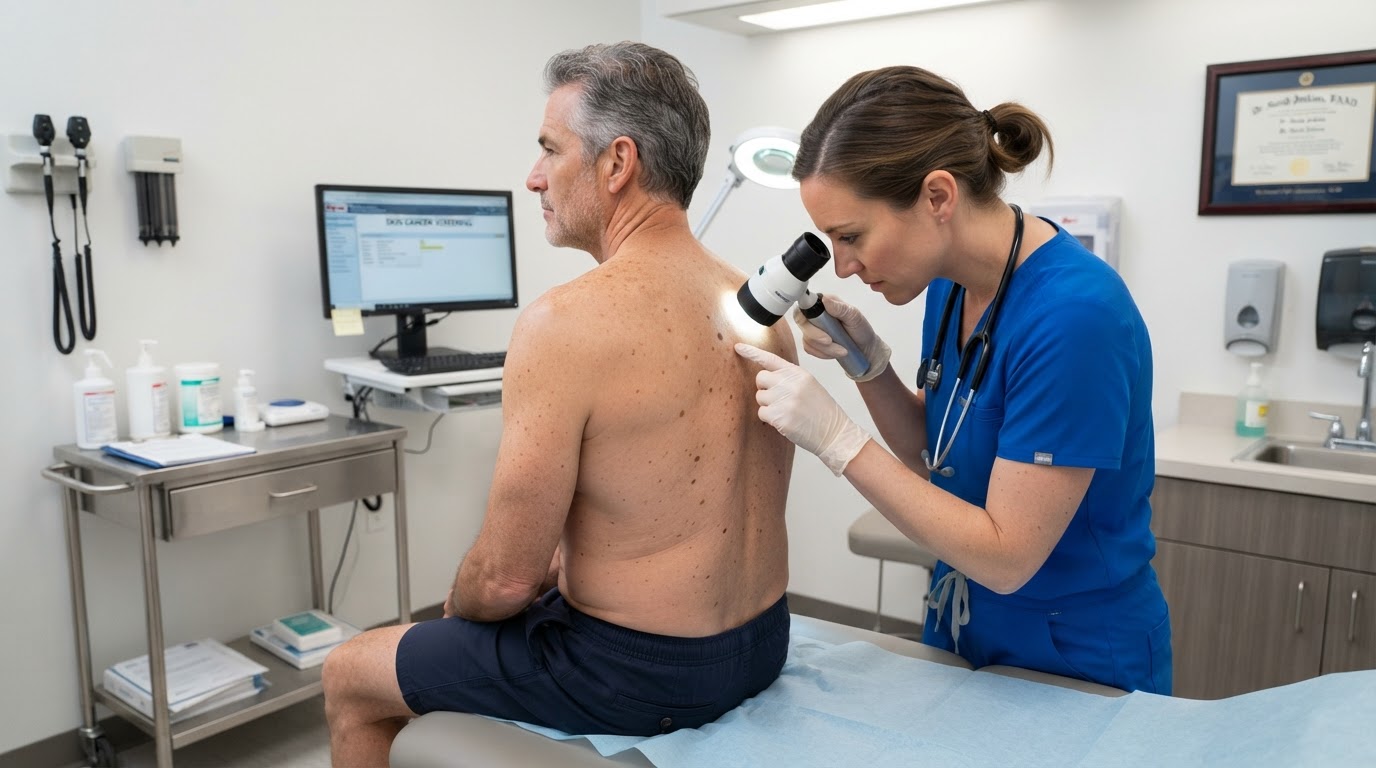
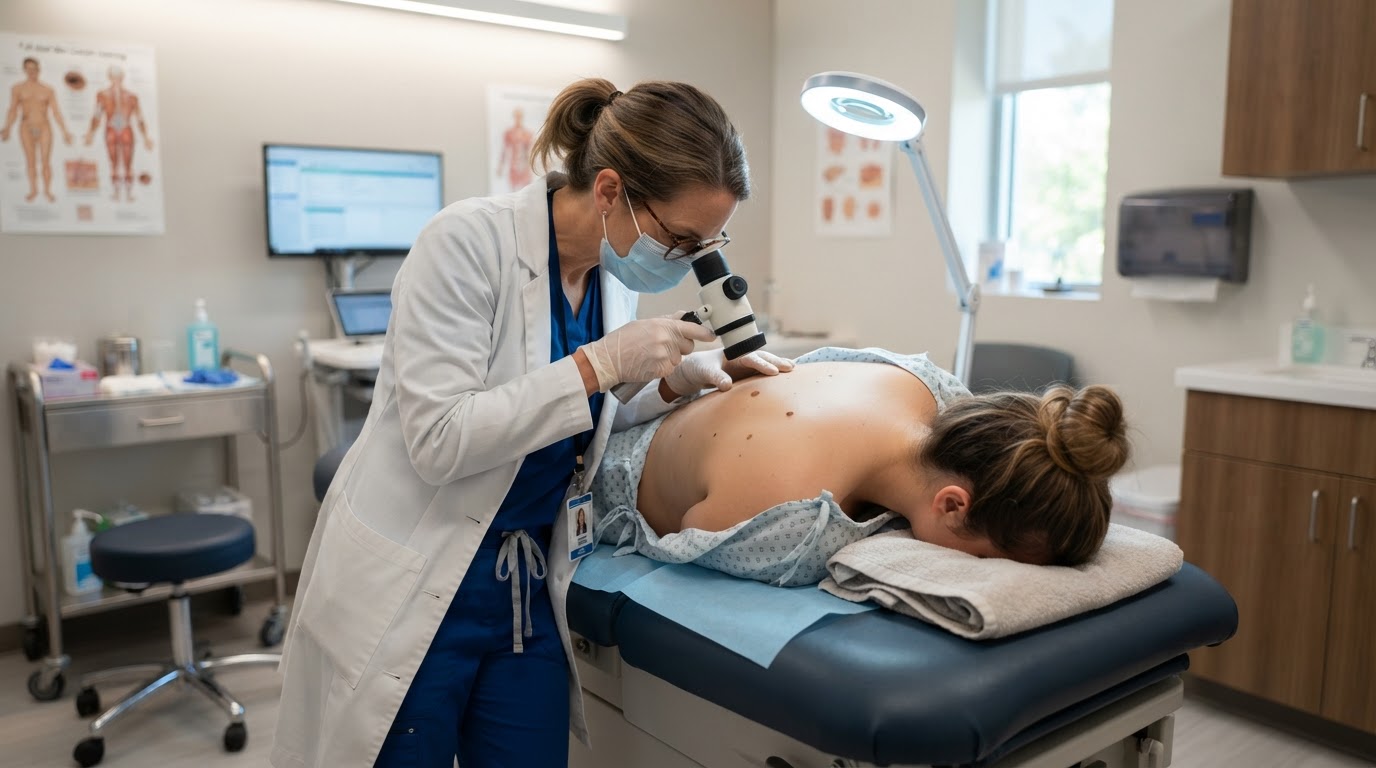
You will be asked to undress to your undergarments and put on a medical gown. The dermatologist inspects the skin region by region, using bright lighting and, when needed, a dermatoscope for magnified views of specific lesions. No area is skipped, including the scalp, the spaces between the toes, the soles of the feet, the buttocks, and the genital region if relevant to your concerns. The examination is non-invasive and typically painless. If a lesion requires further evaluation, the dermatologist may perform a biopsy during the same visit using a local anesthetic.
What the Dermatologist Is Looking For
The dermatologist applies the ABCDE criteria to evaluate moles: asymmetry, border irregularity, color variation, diameter greater than six millimeters, and evolution or change over time. They also look for the so-called ugly duckling sign, a mole that looks noticeably different from the others on your body. Basal cell carcinoma often appears as a pearly bump or a sore that bleeds and does not heal, while squamous cell carcinoma may present as a scaly red patch or a firm nodule. Recognizing these patterns is the core skill that makes a professional examination more reliable than self-inspection alone.
Making the Examination a Routine
Treat a full-body skin examination like any other preventive screening, such as a dental checkup or a cholesterol test. Schedule it at a consistent time each year, perhaps near your birthday, so it becomes a habit. Between professional exams, perform a monthly self-examination in a well-lit room with a full-length mirror and a hand mirror for hard-to-see areas. Combining regular professional screening with consistent self-examination gives you the best chance of catching skin changes early, when treatment is simplest and most successful.
Special Considerations for Higher-Risk Patients
Not everyone needs the same screening schedule, and your dermatologist will tailor recommendations to your individual risk profile. Patients with a personal history of melanoma or atypical moles typically require examinations every three to six months for several years after diagnosis, since the risk of a new primary skin cancer is elevated. Organ transplant recipients and others on long-term immunosuppressive medication face a substantially higher risk of squamous cell carcinoma and benefit from surveillance as often as every three months. People with a strong family history of melanoma, particularly those with known genetic mutations such as CDKN2A, should begin screening at a younger age and continue it more frequently throughout life. Patients who have received significant ultraviolet therapy for psoriasis or other conditions also warrant closer monitoring. If any of these circumstances apply to you, mention them explicitly at your appointment so the dermatologist can build an appropriate surveillance plan. A full-body skin examination is most powerful when it is calibrated to your real risk rather than applied as a one-size-fits-all annual visit, and an honest conversation about your history is the key to getting that calibration right.
This article is educational and is not a substitute for professional medical advice, diagnosis, or treatment. Always seek the guidance of a qualified dermatologist or other licensed health provider with questions about a medical condition.
Looking for a specialist in this area? Browse Full-Body Skin Examinations & Screening