
Finding a Qualified Mohs Surgeon Near You
How to identify a fellowship-trained Mohs surgeon, what the procedure involves, and why training matters for facial skin cancers.
Why Mohs Surgery Is Different
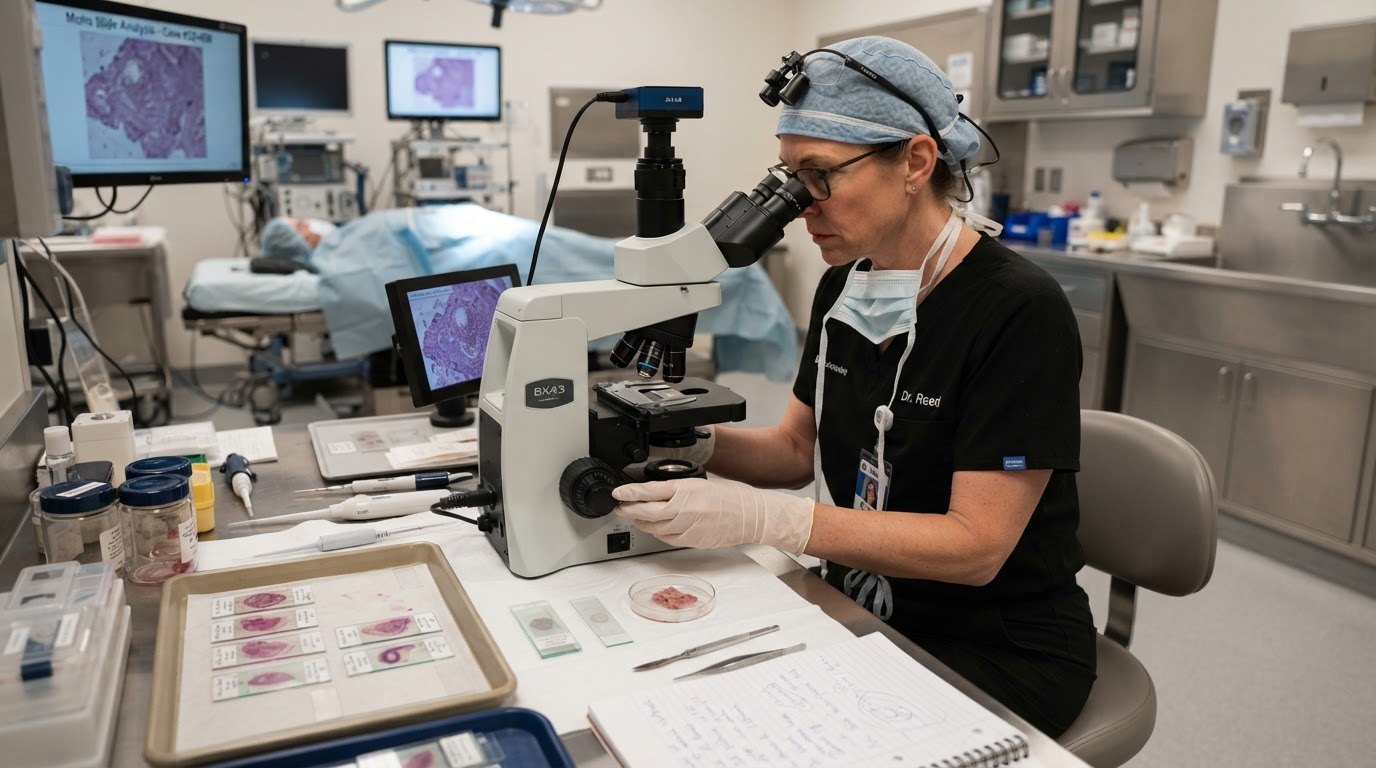
Mohs micrographic surgery is a specialized technique that combines surgical removal of skin cancer with immediate microscopic examination of one hundred percent of the surgical margins. Unlike standard excision, which checks only a small sample of the margin, Mohs examines the entire edge of the removed tissue, ensuring that no cancer cells are left behind. This precision offers the highest published cure rate for basal and squamous cell carcinoma, up to ninety-nine percent for new tumors, while sparing the maximum amount of healthy tissue. Mohs is particularly valuable for skin cancers on the face, where preserving healthy skin is critical for function and appearance.
What Fellowship Training Means
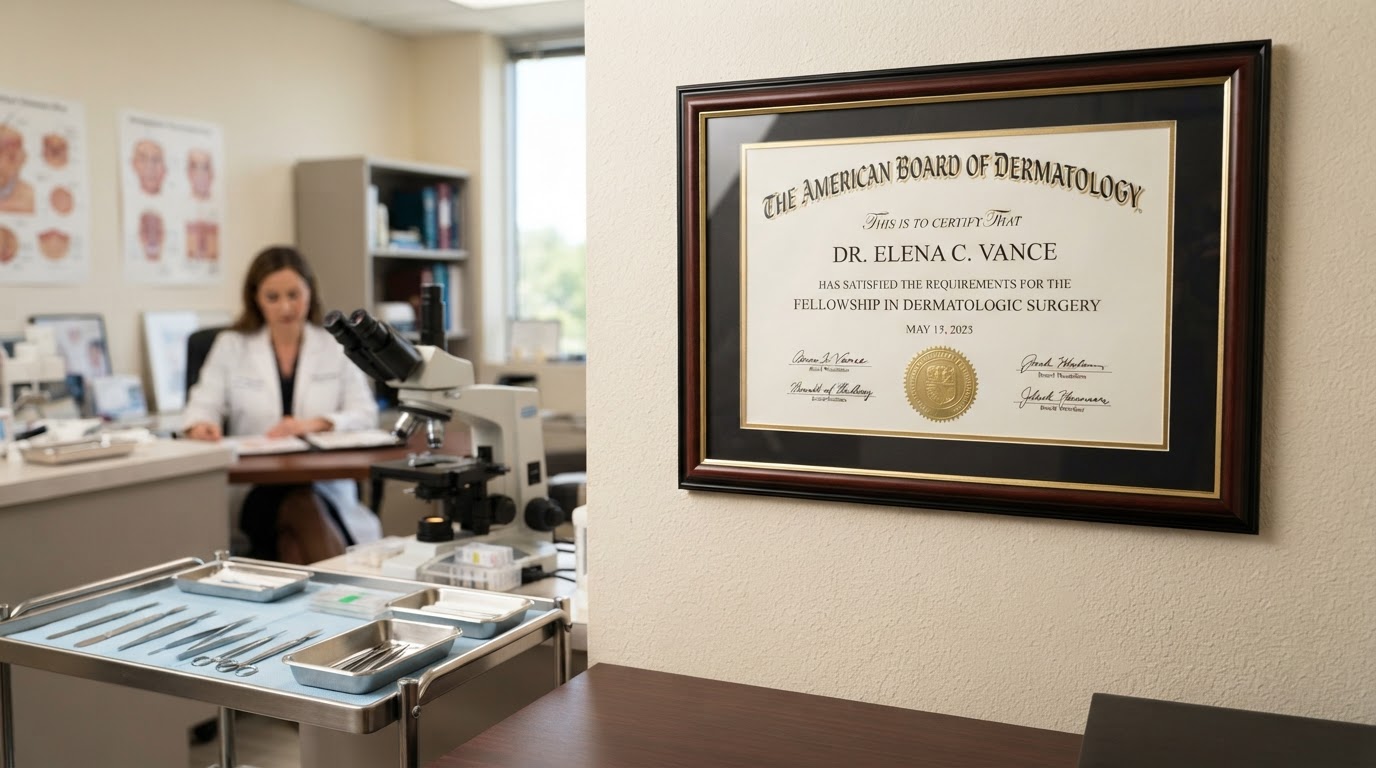
A fellowship-trained Mohs surgeon has completed a one- to two-year accredited fellowship through the American College of Mohs Surgery after their dermatology residency. During the fellowship, the surgeon performs hundreds of Mohs cases and reconstructions under direct mentorship, gaining expertise in both tumor removal and the complex repairs that follow. This additional training is the clearest indicator of competence in Mohs surgery. When searching for a Mohs surgeon near you, confirm fellowship training through the American College of Mohs Surgery's directory or by asking the practice directly.
What the Procedure Involves
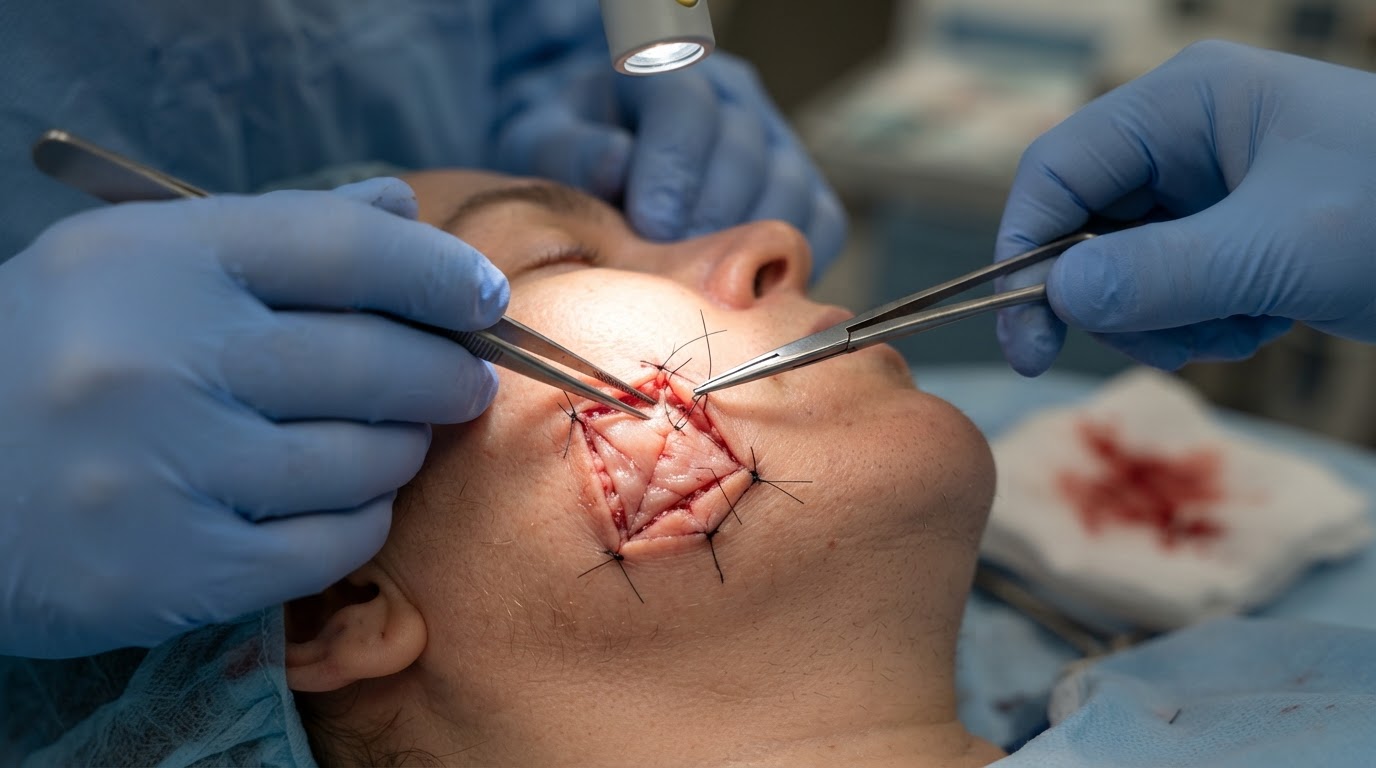
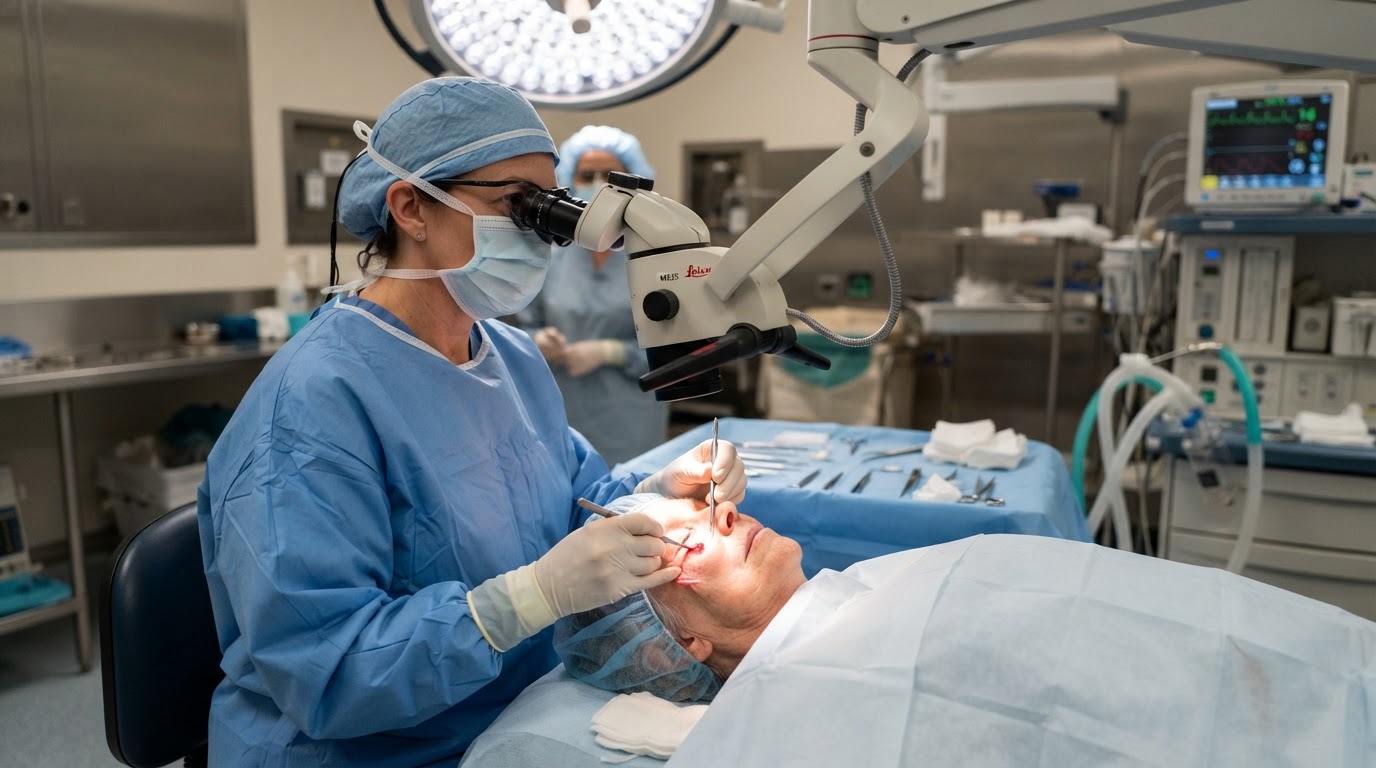
Mohs surgery is performed in an outpatient setting under local anesthesia. The surgeon removes a thin layer of tissue, divides it into sections, and examines them under a microscope while you wait in the office. If any cancer cells remain at the margins, the surgeon maps their precise location and removes another thin layer only from the involved area. This process repeats until the margins are clear, at which point the wound is repaired, often the same day. Most patients go home the same day with a bandage and detailed wound-care instructions.
When Mohs Is the Right Choice
Mohs surgery is recommended for skin cancers in areas where tissue conservation is important, such as the face, eyelids, nose, lips, ears, hands, feet, and genitals. It is also the preferred approach for recurrent tumors, aggressive histologic subtypes, and cancers larger than two centimeters. For low-risk lesions on the trunk or limbs, standard excision may be equally effective and less time-intensive. Your dermatologist will recommend Mohs when the benefits of complete margin examination and tissue sparing outweigh the added time and cost of the procedure.
Locating a Surgeon Through This Directory
This directory lists dermatology practices by city and region, including those that offer Mohs surgery on-site. Use the location pages to identify practices near you that explicitly mention Mohs micrographic surgery among their services. When you call, confirm that the surgeon is fellowship-trained and ask about their experience with lesions in the specific area where your cancer is located. Finding a qualified Mohs surgeon close to home reduces travel burden on the day of surgery and simplifies follow-up, while ensuring you receive the highest-standard care for your skin cancer.
Preparing for Mohs Surgery Day
Once your surgery is scheduled, a little preparation helps the day go smoothly. Arrange for a friend or family member to drive you home, since the local anesthetic and the length of the visit can make driving uncomfortable. Eat a normal breakfast and bring a snack or light lunch, because Mohs can take several hours as each layer is examined microscopically while you wait. Wear clothing that buttons or zips rather than pulls over your head, particularly if your surgery is on the face, so you can change without disturbing the bandage afterward. Bring a book, a charged phone, or another quiet activity to pass the time between stages. Tell the surgeon about any medications you take, especially blood thinners, and follow their instructions about whether to continue or pause them before surgery. Avoid aspirin, ibuprofen, alcohol, and vitamin E for the week before the procedure unless your surgeon advises otherwise, since these can increase bruising and bleeding. On the day of surgery, arrive a few minutes early to complete any remaining paperwork, and be prepared to spend a good part of the day at the office even though many cases finish more quickly. Following these steps reduces stress and helps your surgeon focus on the precise, layer-by-layer work that makes Mohs surgery so effective.
This article is educational and is not a substitute for professional medical advice, diagnosis, or treatment. Always seek the guidance of a qualified dermatologist or other licensed health provider with questions about a medical condition.
Looking for a specialist in this area? Browse Mohs Micrographic Surgery